
Affordable Ways to Cool Your Home
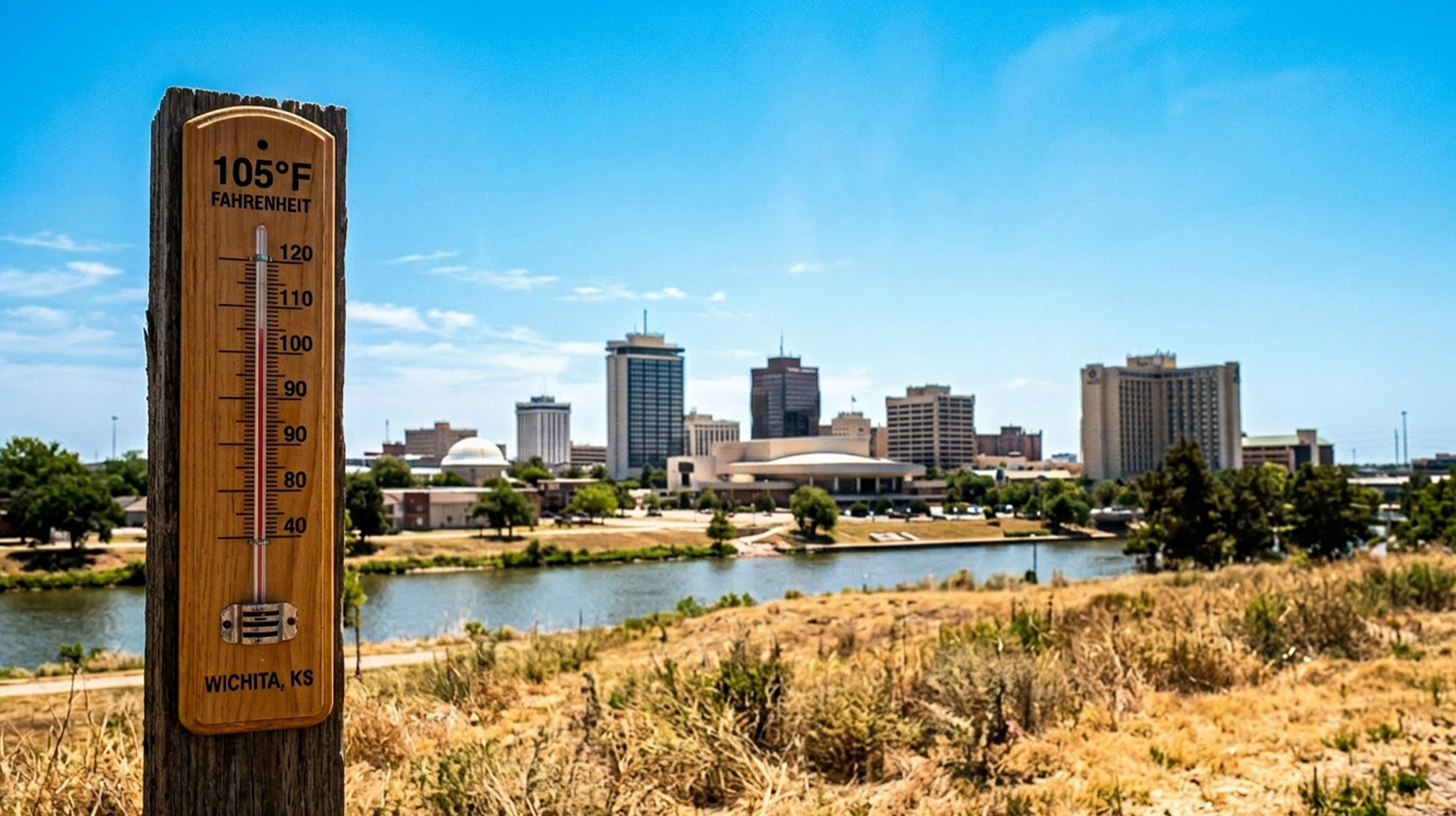
Kansas summers don’t ease into it. When the heat index climbs into triple digits and your utility bill follows, it’s worth knowing affordable ways to cool your home and which changes actually move the needle. Most of these cost little to nothing, and some of them you can do today.
Keep the Sun Out Before It Gets In
Solar heat gain through windows is one of the biggest contributors to creating a hot house. Once that heat is inside, your AC is fighting an uphill battle all day.
- Close blinds and curtains on south- and west-facing windows during peak hours, roughly 11 am to 5 pm.
- Reflective window film is inexpensive, easy to apply, and can meaningfully reduce heat coming through glass without blocking your view entirely.
- Exterior shading, awnings, or even a well-placed shade tree, stops heat before it reaches the glass in the first place, which is even more effective.
Quick Win: A south- or west-facing window with no shade can account for a significant share of your afternoon cooling load. Thermal curtains or cellular shades are one of the cheapest upgrades you can make.
Make Your Fans Actually Work
Fans don’t lower the temperature in a room, but they make it feel cooler by moving air across your skin. Used right, they let you raise your thermostat a few degrees without noticing the difference.
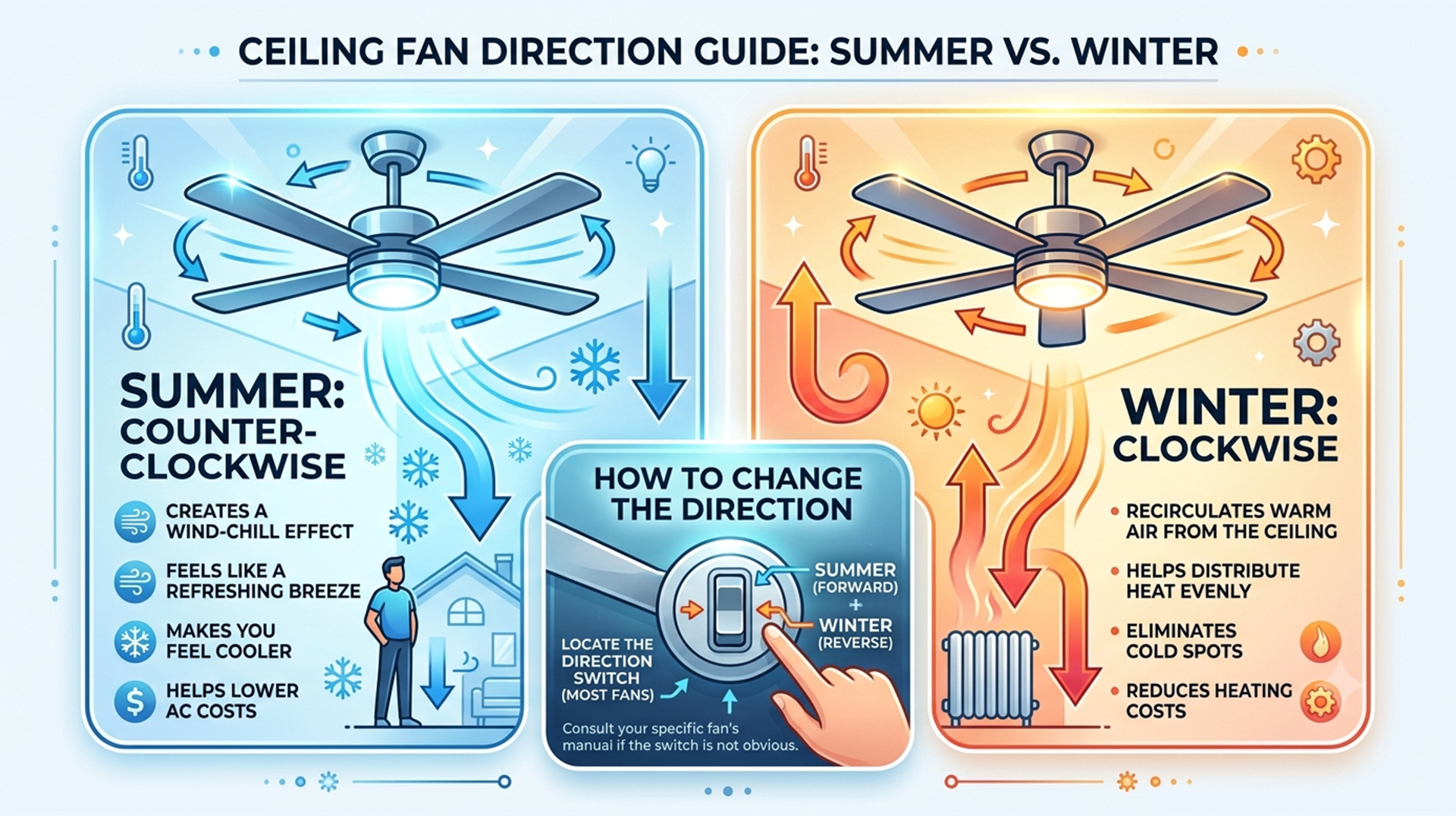
- Ceiling fans should rotate counterclockwise in summer. That’s the setting that pushes air straight down. Most fans have a small direction switch on the motor housing.
- Box fans in windows work best when outside air is cooler than inside air, typically early morning or after dark. Pull cool air in on the shaded side of the house, and exhaust warm air out on the opposite side.
- During the hottest part of the day, running fans with windows open can actually bring in more hot air than it removes. Keep them closed and let the AC do the work.
Tune Up Your Cooling System
A neglected HVAC system works harder, costs more to run, and is more likely to fail when you need it most. None of this is complicated maintenance.
- Change air filters every one to three months depending on your system and household. A clogged filter restricts airflow and makes the whole system less efficient.
- Schedule a seasonal HVAC check before peak heat. A technician can catch refrigerant issues, check electrical connections, and clean coils before a small problem becomes a breakdown in July.
- If you use window units, check the seal around the unit. Gaps let conditioned air out and hot air in, and a simple foam seal or weatherstrip fix takes about ten minutes.
Worth the Call: An HVAC system running at reduced efficiency because of a dirty coil or low refrigerant can use significantly more energy to produce the same cooling. A tune-up typically pays for itself quickly in a hot Kansas summer.
Stop Adding Heat Inside the House
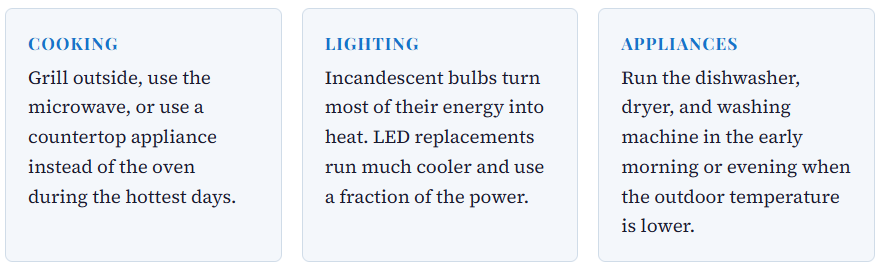
Your oven can raise the temperature in a kitchen noticeably during use. Lighting and other appliances contribute too, especially older ones. A few easy habit shifts help:
Seal Up the Gaps
Air leaks work against you in both summer and winter. Conditioned air escapes, hot air seeps in, and your system runs longer than it needs to.
- Check weatherstripping on exterior doors. If you can see daylight around the frame when the door is closed, you have a gap worth fixing.
- Caulk around window frames, especially older ones, where the seal may have cracked or shrunk over time.
- Close off unused rooms during the hottest hours so your system focuses on the spaces you’re actually in.
- If your home consistently traps heat on the upper floors, attic insulation is worth evaluating. An under-insulated attic lets radiant heat from the roof transfer directly into the living space.
Outdoor Upgrades Worth Considering
Some of the most effective ways to keep your home cooler involve what’s outside it, not inside.
- Shade trees planted on the south and west sides of a home can reduce cooling costs noticeably once they mature. They take time to grow, but the sooner you plant them, the sooner they work.
- Reflective or cool roofing materials reflect more solar radiation than standard asphalt shingles, which can reduce attic temperatures considerably. Worth asking about if you’re due for a roof replacement.
- Hardscape surfaces like concrete and dark asphalt around the house absorb and radiate heat. Lighter-colored paving or permeable materials reduce the heat island effect around your foundation.
Heat Safety: Don’t Skip This Part
Home comfort is one thing, but heat exposure is a genuine health risk, especially for older adults, young children, and anyone working or spending time outside. Kansas heat waves are serious.
- Drink water consistently throughout the day, not just when you feel thirsty. Thirst is a late indicator of dehydration.
- Limit physical activity or outdoor exposure between 10 a.m. and 4 p.m. during heat advisories.
- Check on elderly neighbors and family members. Indoor temperatures in a home without functioning AC can become dangerous quickly.
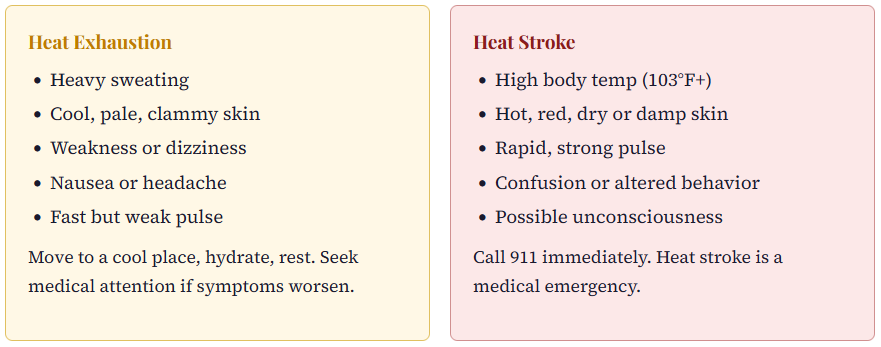
Know the difference between heat exhaustion and heat stroke. One requires rest and fluids; the other is an emergency.
The Takeaway
The most effective summer strategy works from the outside in: block heat before it enters, reduce the heat you generate inside, and make sure your cooling system is running efficiently. Most of the items on this list cost under $50 and a Saturday afternoon. A few cost nothing at all.
And while we’re on the subject of home preparedness, summer is a good time to make sure your homeowners policy reflects what you actually have. If you’ve done upgrades this year, made any major purchases, or haven’t reviewed your coverage in a while, give us a call.
Policy Questions? We’re Easy to Reach.
If it’s been a while since you looked at your homeowners coverage, we’re happy to do a quick insurance review with you.
This post is for general informational purposes only and does not constitute professional home improvement or medical advice.