
“Wait, That’s Not Covered?” The Insurance Myths We Hear Every Week in Wichita
Flood, hail, renters, side gigs, and what really moves your rate. Here’s what your policy usually does and doesn’t do, and exactly where to look to find out.
Most coverage surprises don’t come from fine print nobody could find. They come from things people assumed were covered because it seemed obvious.
A recent national consumer survey found big gaps between what people think their policies do and what they actually do. Here are the five myths we run into most, what’s actually true, and what to check on your own policy.
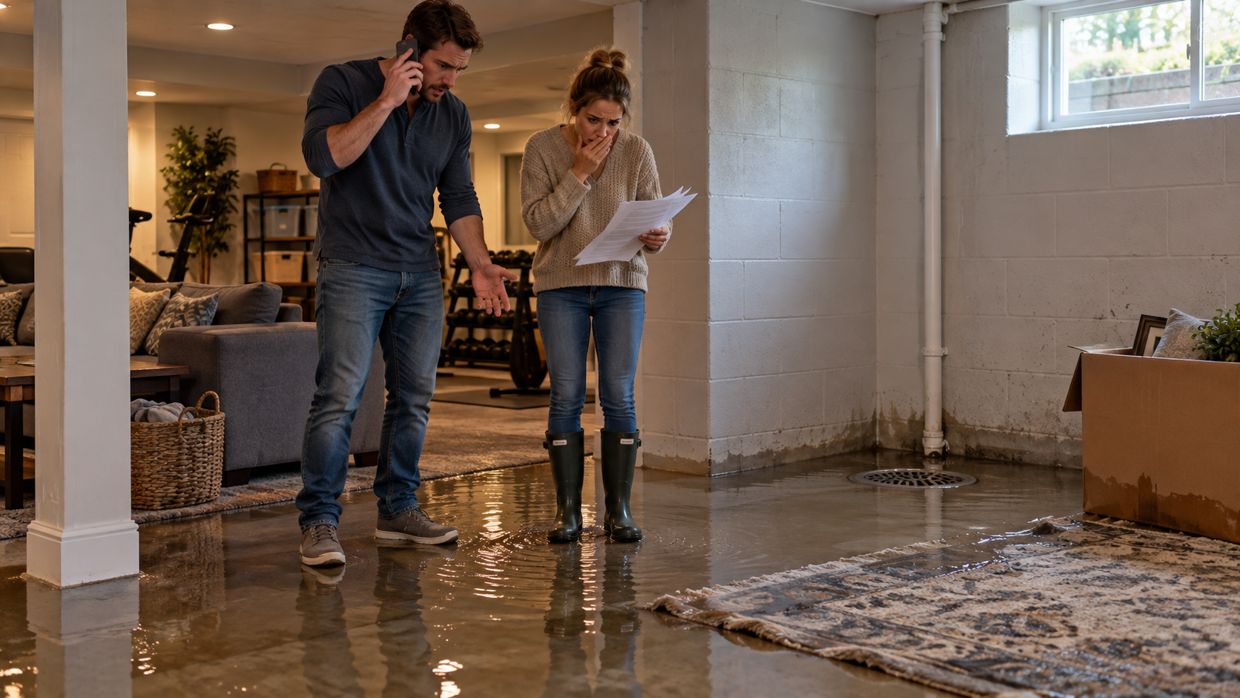
Myth #1: “My homeowners policy covers flooding and water backup”
A standard homeowners policy does not cover flooding. In that same survey, 56% of people didn’t know that.
Flood coverage is a separate policy, usually through the National Flood Insurance Program. In Kansas, very few people carry it. Fewer than 1 in 100 Kansas homes have a federal flood policy, even though a big share of flood damage happens outside FEMA’s high-risk zones.
After the June 2025 flooding around Wichita, many affected residents in Sedgwick and Butler counties were pointed toward SBA disaster loans. That’s help, but it’s a loan. You pay it back.
Don’t wait for the forecastFederal flood policies generally have a 30-day waiting period before coverage starts. Buying one when the rain is already coming is usually too late.
Water backup is a different coverage
Sewer and drain backup is usually a separate add-on to your homeowners policy, and 38% of homeowners in the survey hadn’t checked whether they have it.
“A flood comes in the door. A backup comes up the drain. They’re two different coverages.”
Marc Shook, Shook Insurance Agency
Myth #2: “Insurance will buy me a new roof after hail”
Kansas is hail country, and the numbers prove it. Verisk’s 2026 U.S. Roof Report found that 51.8% of Kansas roofs were hit by severe hail in 2025, the highest share in the nation. The average roof replacement now costs $17,631.
Whether your policy pays for a new roof depends on how your roof is covered. More and more policies settle older roofs at actual cash value (ACV), meaning the depreciated value, not the cost of a new one.
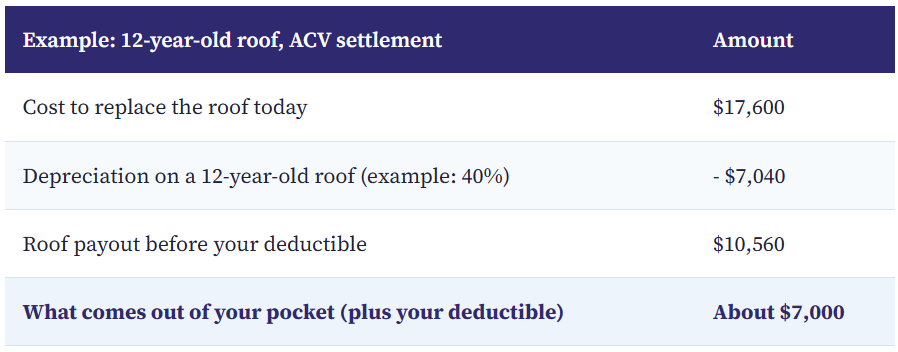
What to look for on your declarations pageYour declarations page is the summary page of your policy. Look for the words “actual cash value” or “roof surfacing,” and find your wind/hail deductible. If either one surprises you, call us before the next storm, not after.
One more roof-adjacent myth: a lot of people assume materials for a remodel are covered the minute they’re delivered. Coverage for materials sitting in the driveway or garage before they’re installed can be limited, especially for theft during construction. If you’re starting a project, ask first.
Myth #3: “My landlord’s insurance covers my stuff”
It doesn’t. Your landlord’s policy covers the building. It doesn’t cover your belongings, and it doesn’t cover you if a guest gets hurt in your apartment or you accidentally cause damage to someone else’s unit.
Roughly 45% of U.S. renters have no renters insurance, usually because they think the landlord’s policy has them covered or assume it’s expensive. It’s not. In Kansas, a typical renters policy averages around $167 a year. That’s less than a month of most internet bills.
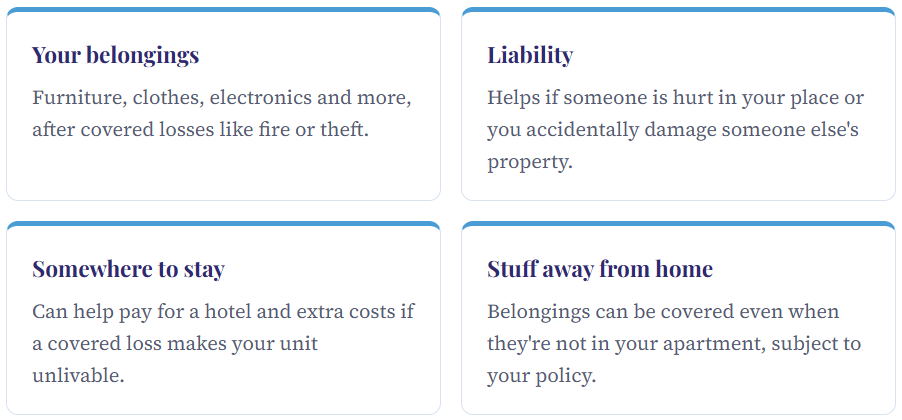
The laptop in the back seat44% of people in the survey thought their auto policy would pay if a laptop was stolen out of their car. It usually won’t. Personal belongings stolen from your car generally fall under your renters or homeowners policy, not your auto policy.
Myth #4: “My car insurance covers me no matter what I’m doing”
55% of people in the survey didn’t know their personal auto policy may not cover business driving. If you deliver food, drive for a rideshare app or use your car for work, that matters. DoorDash itself tells drivers that many personal policies aren’t built for delivery driving.
Lending your car
In general, coverage follows the car. If a friend borrows your truck and wrecks it, your policy is usually the one that pays. That can change fast in two situations:
- The driver is specifically excluded from your policy. A claim involving an excluded driver can be denied.
- Someone who lives with you drives your car regularly and was never listed on the policy.
A new side gig, a teen driving a friend’s car, a roommate who borrows yours. Tell us before it happens, not after.
Myth #5: What actually moves your rate (and what doesn’t)
57% of people in the survey thought a parking ticket raises insurance premiums. It generally doesn’t. Parking tickets aren’t moving violations. Speeding tickets, at-fault accidents, and claims history are a different story.
Your credit, and Kansas rules on it
Kansas allows insurers to use credit-based insurance scores, with limits. Under Kansas law, insurers can’t build that score using factors like your income, gender, address or ZIP code, ethnicity, or marital status. And if your credit information leads to a higher rate, you’re entitled to a written notice explaining why.
The one thing almost nobody has: a home inventory
46% of people in the survey either have no home inventory or aren’t sure. If you ever have a big claim, you’ll need to list what you lost. Trying to remember everything in your closets after a fire is brutal.
Marc’s 10-minute fixOnce a year, walk through your home with your phone recording video. Open closets and drawers. Talk through anything valuable as you go. Save the video somewhere other than your phone, like cloud storage or an email to yourself.
Want the auto side of this? Read our post on the most expensive sentence in auto insurance.
Find out before it happens
Bring us your home, renters, or auto policy, and we’ll go through it with you. We’ll point out the gaps, explain your declarations page in plain English, and make sure there are no surprises when you need it most.
Shook Insurance Agency • 3931 N Ridge Rd, Ste 102, Wichita, KS 67205 • 316-282-8006 • shook-insurance.com
This post is for general educational purposes and does not constitute legal or insurance advice. Coverage varies by policy and carrier. Survey percentages are from a September 2026 national consumer survey reported by Insurance Business and the Hanover/Harris Poll 2026 Home Report. Other sources: Verisk 2026 U.S. Roof Report; FEMA National Flood Insurance Program data; Kansas Department of Insurance; K.S.A. 40-5104 and 40-5107.